
Managing Music Teachers: Scheduling, Pay, and Keeping Them Happy
In a music school, your teachers are the product. A brilliant instructor fills their roster and keeps students for years; a frustrated one leaves and takes their students with them. Yet most owners spend all their admin energy on students and billing, and run teacher management out of their head. Here's how to do it properly.
1. Start with availability, not the schedule
The most common scheduling mistake is booking a student first and finding a teacher second. It should be the reverse. When each teacher sets and owns their own availability, you can only ever book lessons into slots that actually work — no awkward "actually I can't do Tuesdays anymore" conversations after a parent has committed. This one habit eliminates the majority of scheduling conflicts before they happen.
2. Give teachers their own view
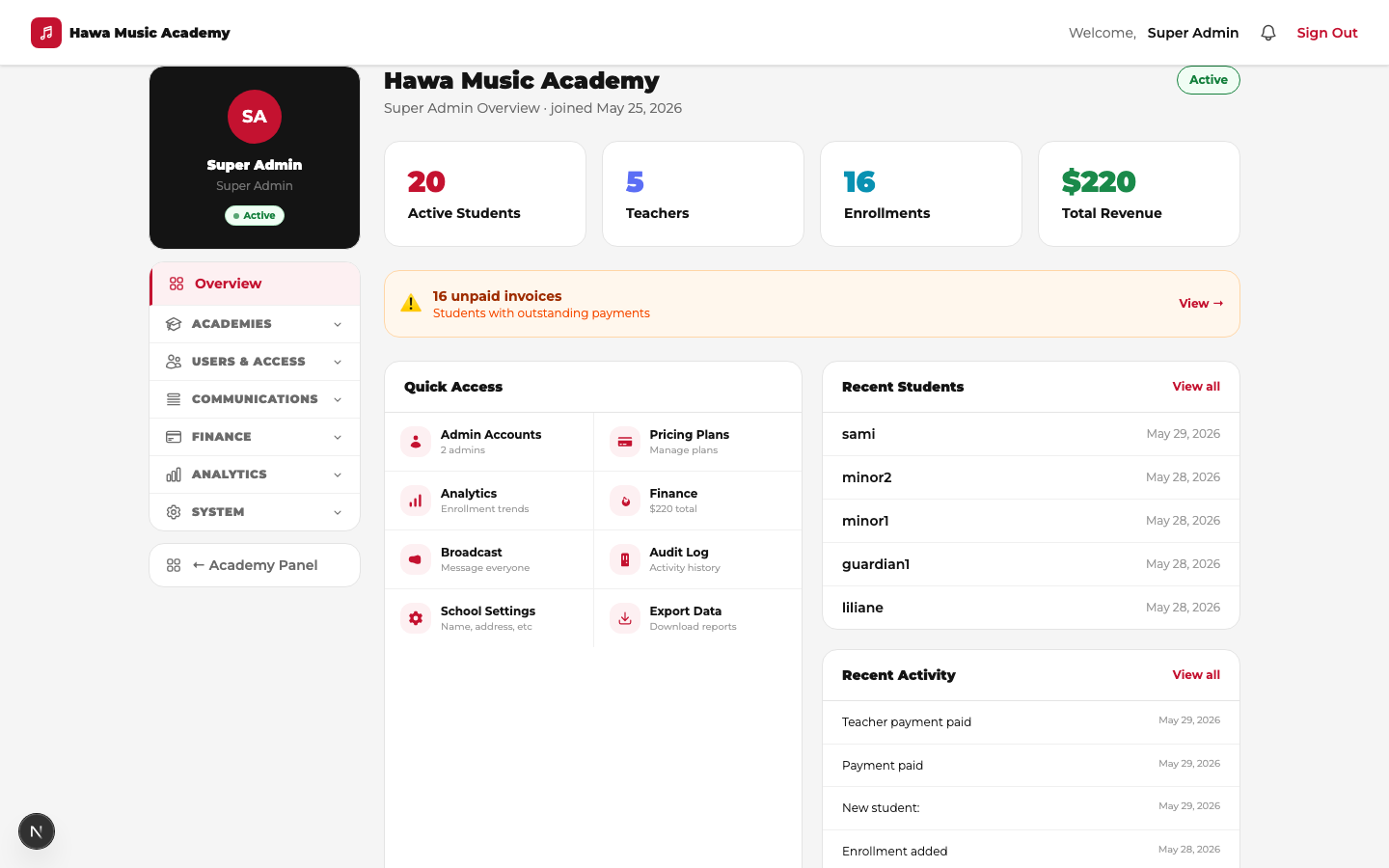
Teachers shouldn't have to message you to find out who they're seeing on Thursday. A dedicated teacher login — showing their schedule, their students, lesson notes and their pay — removes a huge amount of back-and-forth and makes good instructors feel like professionals, not contractors waiting on a text. It also means lesson notes and attendance get logged by the person who was actually in the room.
3. Pay accurately, and pay on time
Nothing erodes a teacher's goodwill faster than a wrong or late paycheck. The problem is that teacher pay is genuinely fiddly: different rates per teacher, per-session vs monthly arrangements, group classes split differently from private lessons, and make-ups that may or may not count. Calculating this by hand each month is slow and error-prone.
The fix is to generate teacher pay from the same attendance data that drives student billing. When a lesson is marked delivered, the teacher's earning is calculated automatically at their rate. No spreadsheet, no disputes, no month-end dread. We touch on the billing side of this in our billing guide.
4. Decide your pay model deliberately
- Per session — teachers earn for lessons actually delivered. Aligns their pay with attendance and protects your margin.
- Fixed monthly — predictable for the teacher, simpler for you, but you carry the risk of no-shows.
- Revenue share / rate per student — scales naturally as a teacher grows their roster, and motivates retention.
Whichever you choose, make it transparent. A teacher who can see exactly how their pay is calculated trusts you — and trust is what keeps them.
5. Protect your teachers from no-shows
If a teacher shows up and the student doesn't, who absorbs that? Schools with high turnover usually make the teacher eat it. Schools that keep their best instructors have a clear policy — a cancellation window, a make-up rule — so teachers aren't quietly subsidising flaky students. This ties directly into reducing no-shows: every missed lesson is a teacher-relations issue as much as a revenue one.
6. Keep great teachers by removing friction
Teachers rarely leave over money alone. They leave because the admin is chaotic, their pay is unpredictable, and they feel like an afterthought. Give them a clean schedule, accurate automatic pay, their own portal, and a school that handles the logistics — and you become the studio instructors recommend to each other.
The easy way
Spoteca gives every teacher their own login, builds the schedule around their availability, and calculates their pay automatically from delivered lessons — private and group alike. See how it compares to other tools, or start free and add your first teacher today.
Run your music school without the chaos
Free forever for up to 10 active students. No credit card required.
Get Started Free